
Horizon Design System Case Study: Building ServiceNow's Design Platform and Creator Ecosystem

Building Horizon
How we transformed a design system into the operating system for design at ServiceNow
When I joined the Horizon initiative, the challenge wasn't creating more components. The challenge was creating a place where designers could actually discover, learn, understand, and use them.
Over three years, I helped design and launch the platform experience behind Horizon — owning the information architecture and content model, and shaping the content strategy, education ecosystem, design resources, and creator workflows that thousands of ServiceNow employees rely on today. Horizon is now the source of truth for experience design at ServiceNow.
Role: Senior Staff Product Designer
Areas: Design Systems · Information Architecture · Platform Strategy · Design Enablement · UX Education · Figma Infrastructure · Visual design
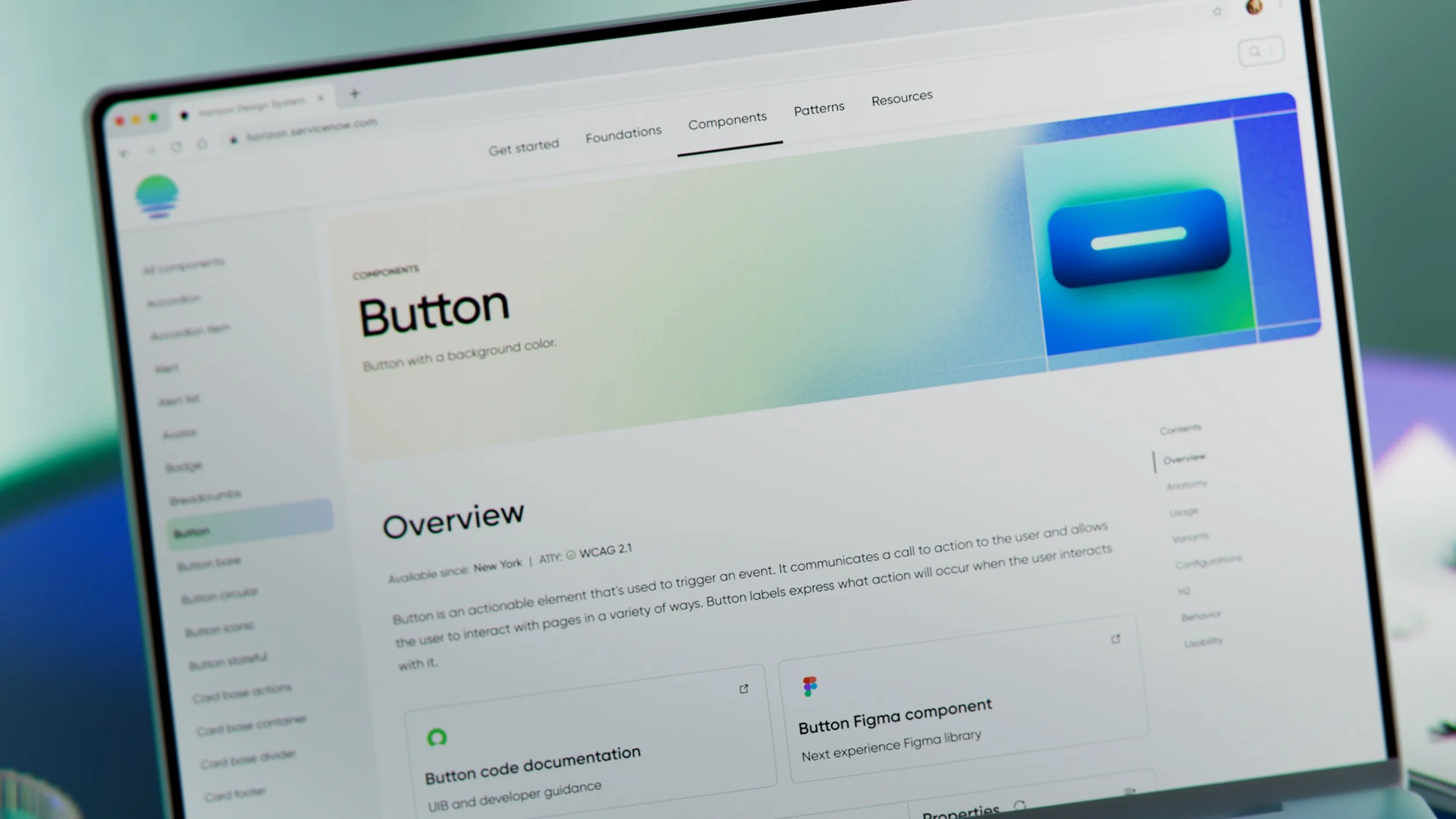
The Problem
A design system is useless if nobody can find it
By 2023, ServiceNow already had a mature design system. The real challenge was adoption.
Designers were navigating multiple SharePoint sites, separate documentation systems, fragmented design guidance, distributed Figma resources, and inconsistent education materials. The knowledge existed — it lived as tribal knowledge spread across teams, and finding the right answer often depended on knowing the right person.
As ServiceNow continued to grow, that model stopped scaling.
We didn't need another documentation site. We needed a platform.
Benchmarking
First, we studied the best design systems in the world
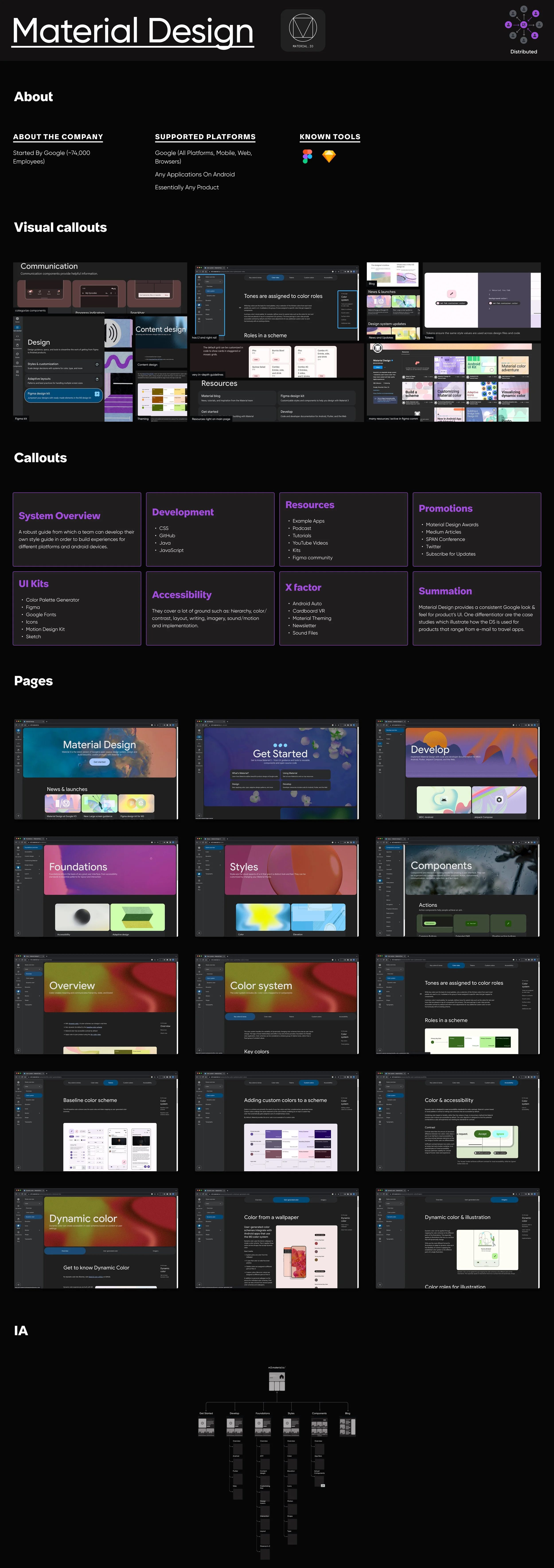
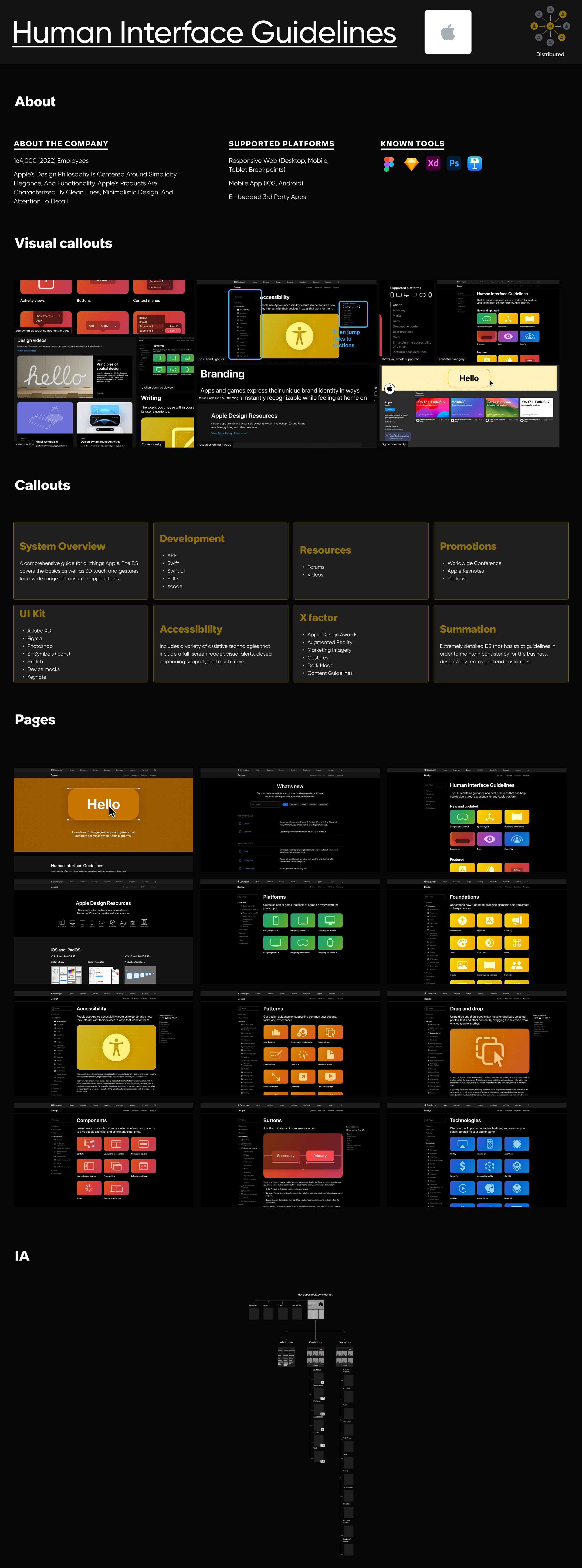
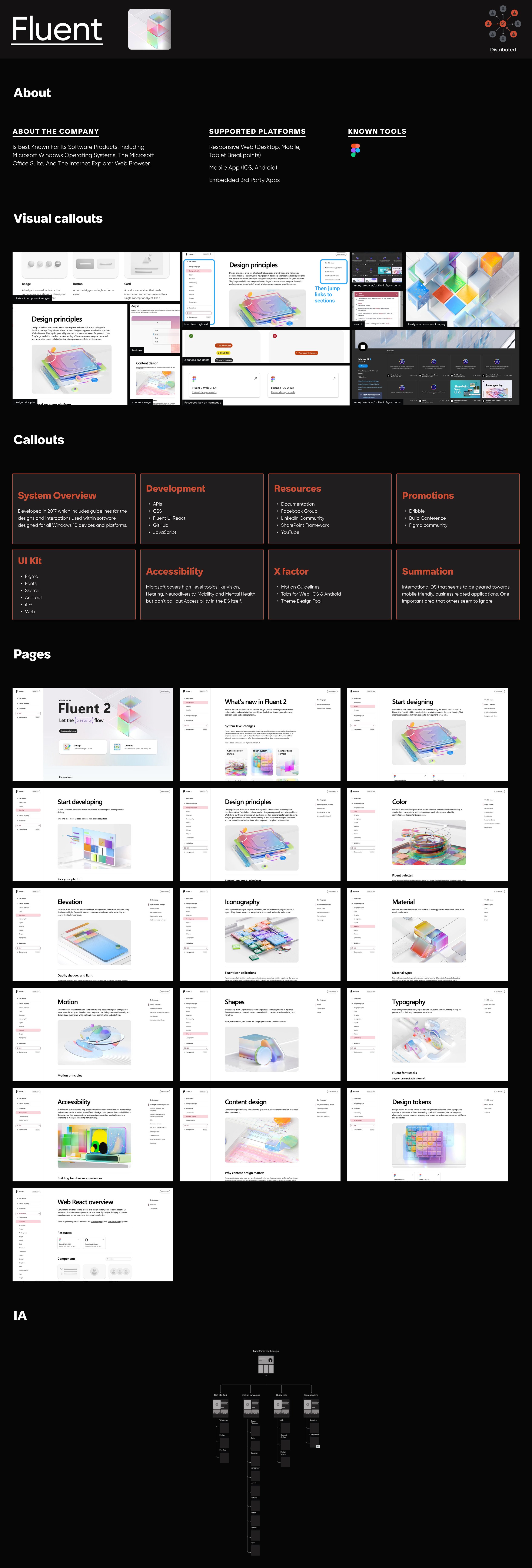
Before designing anything, I audited nine leading systems — Google's Material Design, Microsoft Fluent, Apple's Human Interface Guidelines, Adobe Spectrum, Salesforce Lightning, Shopify Polaris, Atlassian, IBM Carbon, and Uber's Base — using the same template for each: company and platform context, visual callouts, a structured analysis (system overview, development, resources, promotions, UI kits, accessibility), a full page inventory, and a map of their information architecture.
The pattern was consistent. The systems that achieved real adoption weren't just well documented — they were ecosystems. Resources and tutorials surfaced on the homepage. Accessibility treated as a first-class discipline, documented in depth. Case studies showing the system working in real products. Active communities around the system, not just files inside it.
Material's own summation made the point plainly: its differentiator was case studies illustrating how the design system is used across real products, from email to travel. People adopt what they can see working.
That became our brief: Horizon couldn't just publish a system. It had to teach, showcase, and organize — a platform people could learn from, not a library they had to already understand.
Defining the opportunity
What if the design system became a product?
Creating the foundation
Instead of asking "How do we document components?" we asked "How do we create the best experience for people designing on ServiceNow?"
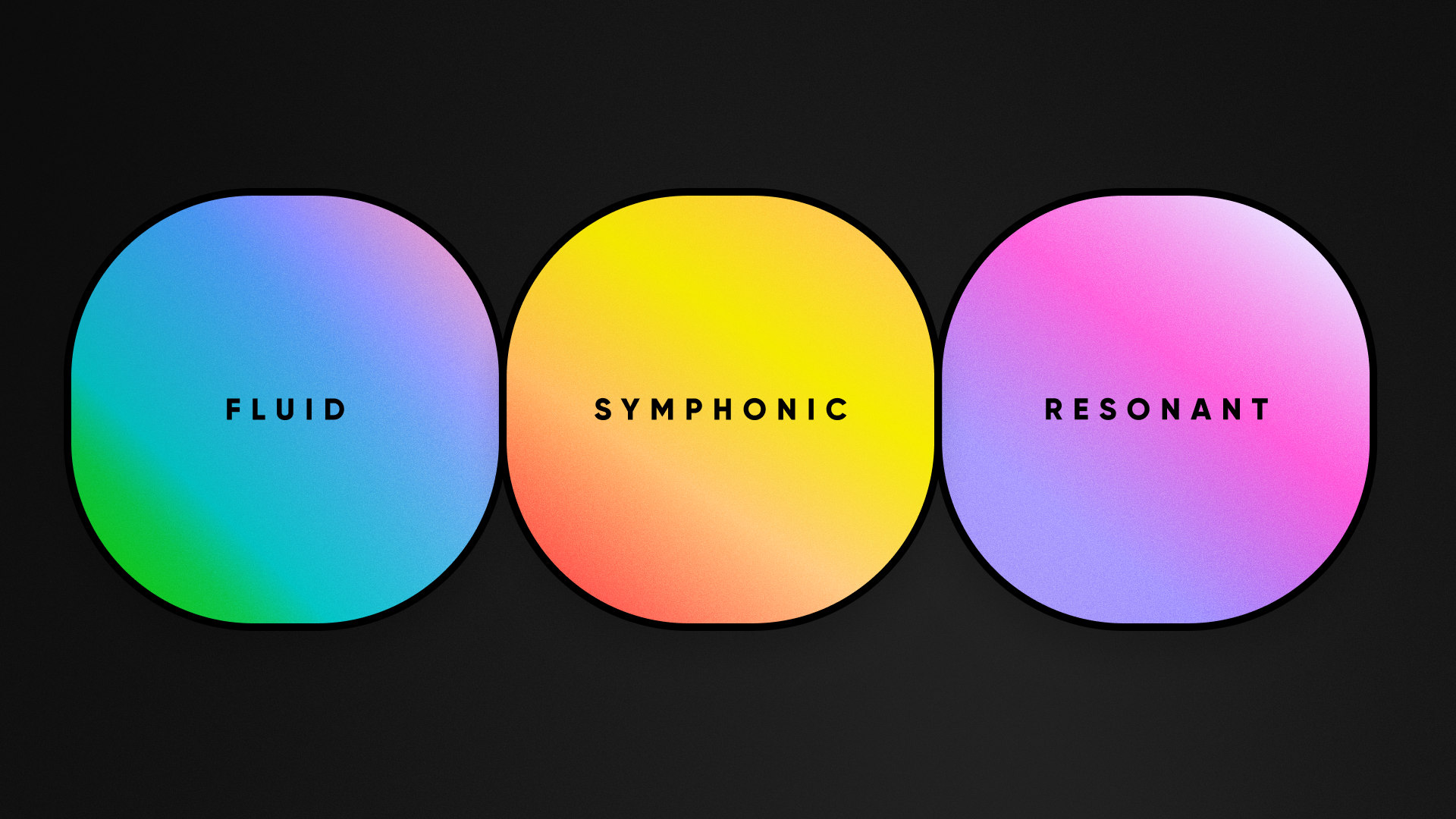
That shift changed everything. The project expanded from documenting UI patterns to building a creator ecosystem:
Design documentation and component discovery
Pattern guidance and accessibility standards
Education resources and learning pathways
Figma libraries and framework guidance
AI enablement
Information architecture
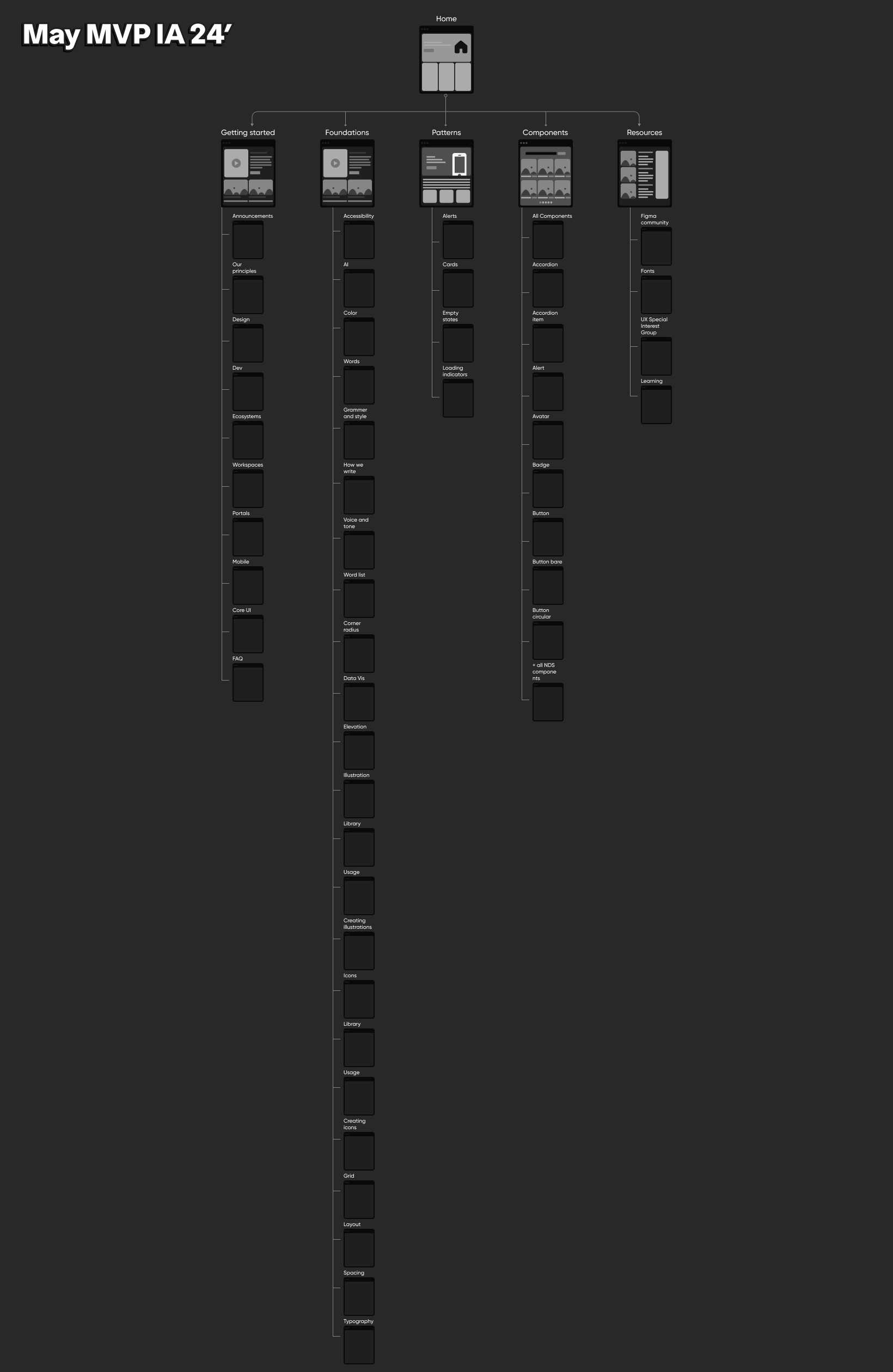
Before visual design began, we had to answer fundamental questions. How should designers navigate the system? What content should live where? Should content be organized by component, by workflow, or by framework? How do beginners and experts each find what they need?
I led the exploration work that mapped the ecosystem before a single production page existed. That map became the blueprint for the platform that launched.
Exploration
Hundreds of ideas before one solution
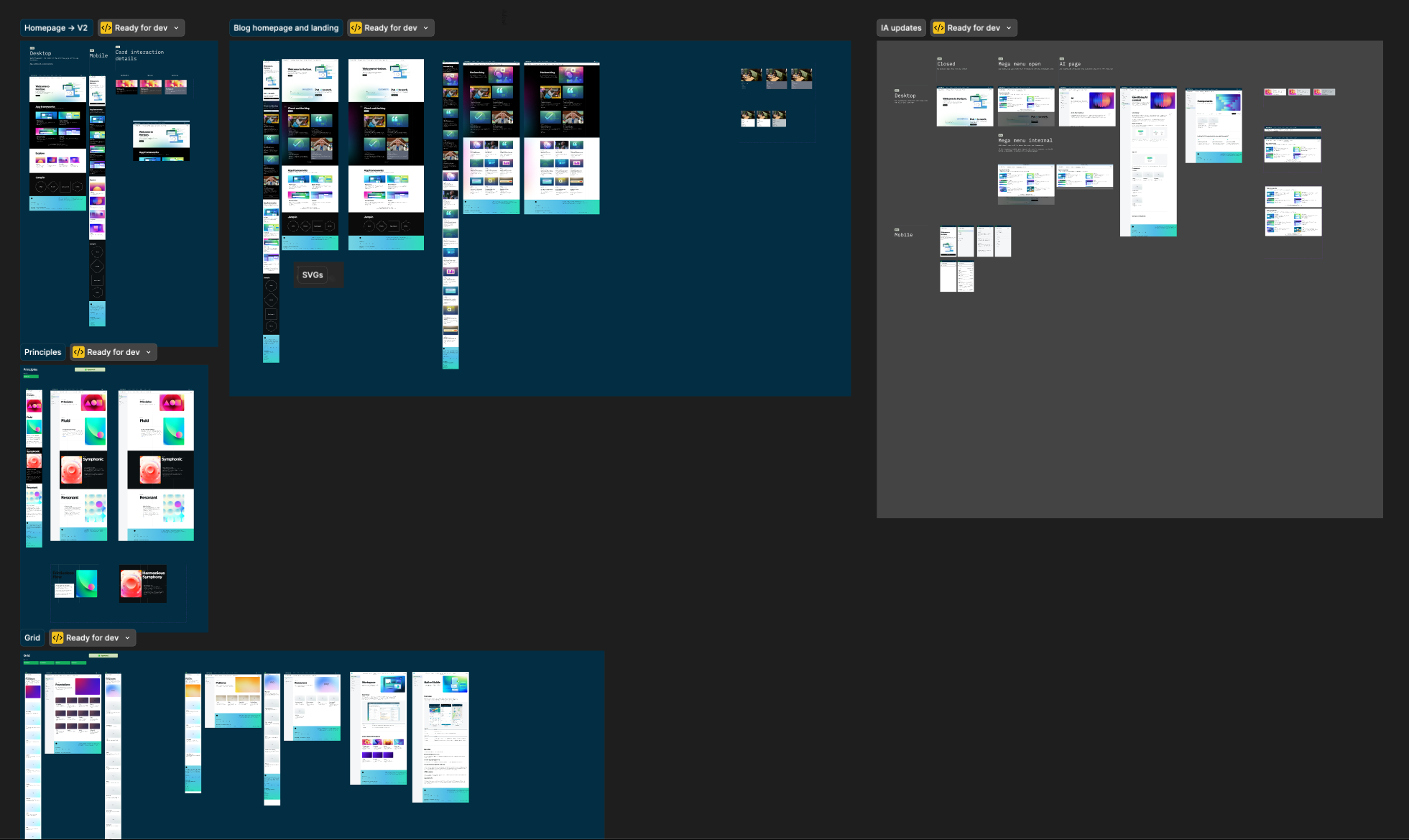
The site that exists today was the result of extensive exploration. We tested navigation models, homepage concepts, content structures, resource discovery approaches, learning pathways, and component browsing experiences.
Rather than optimizing for documentation, we optimized for learning.
Launch
Bringing Horizon to life
Launching Horizon required close collaboration across design systems, product design, content strategy, education teams, and engineering.
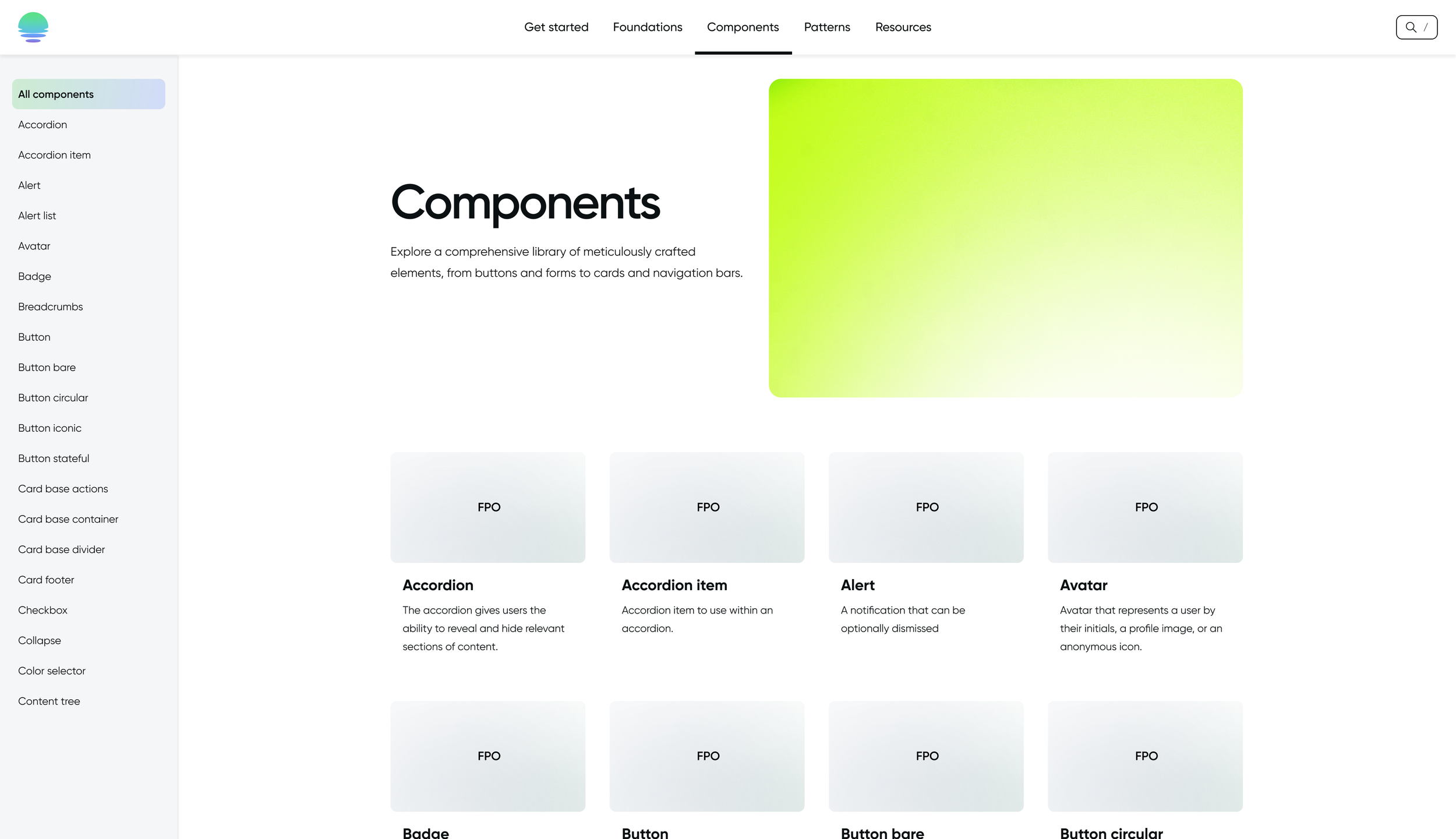
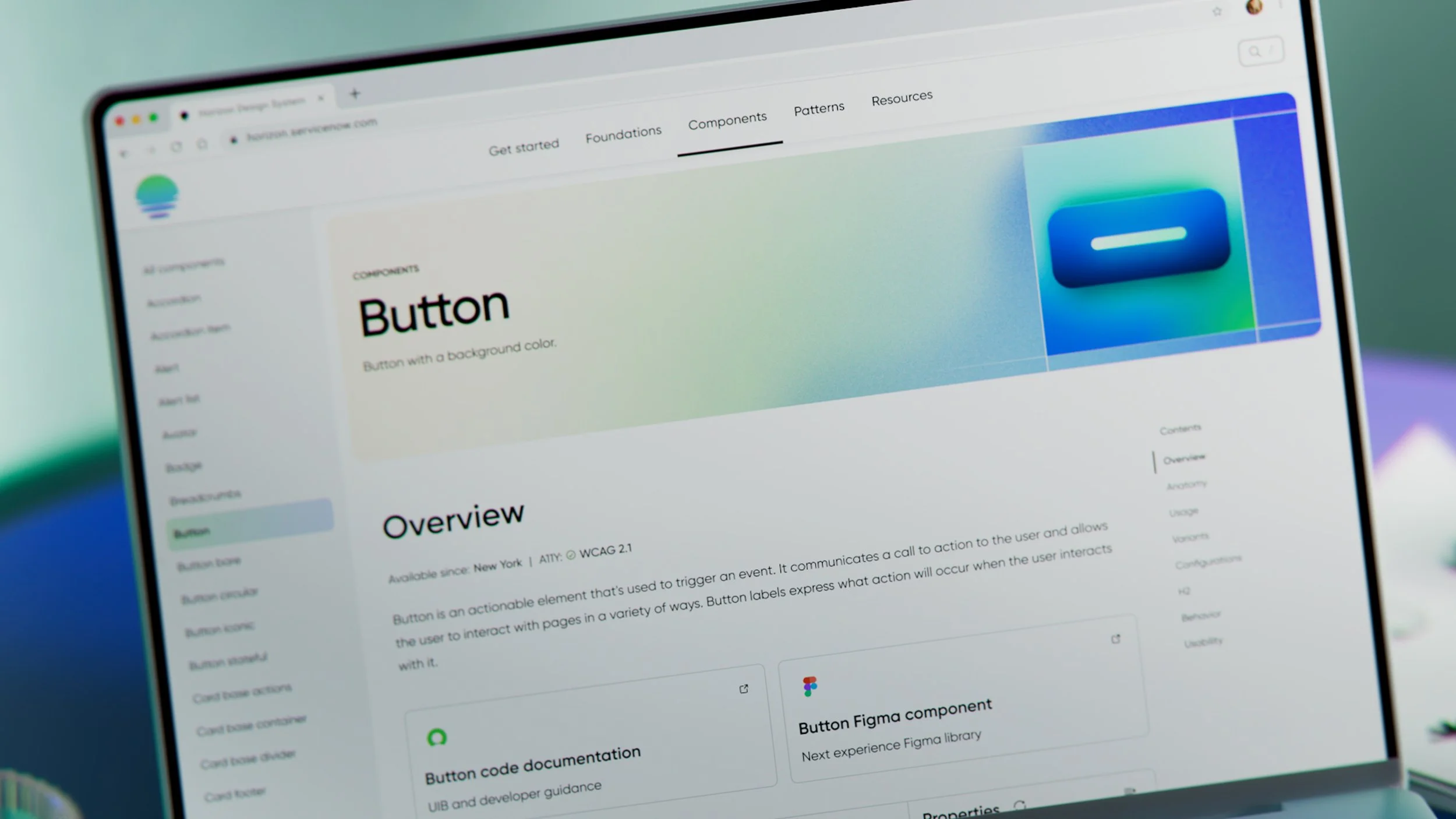
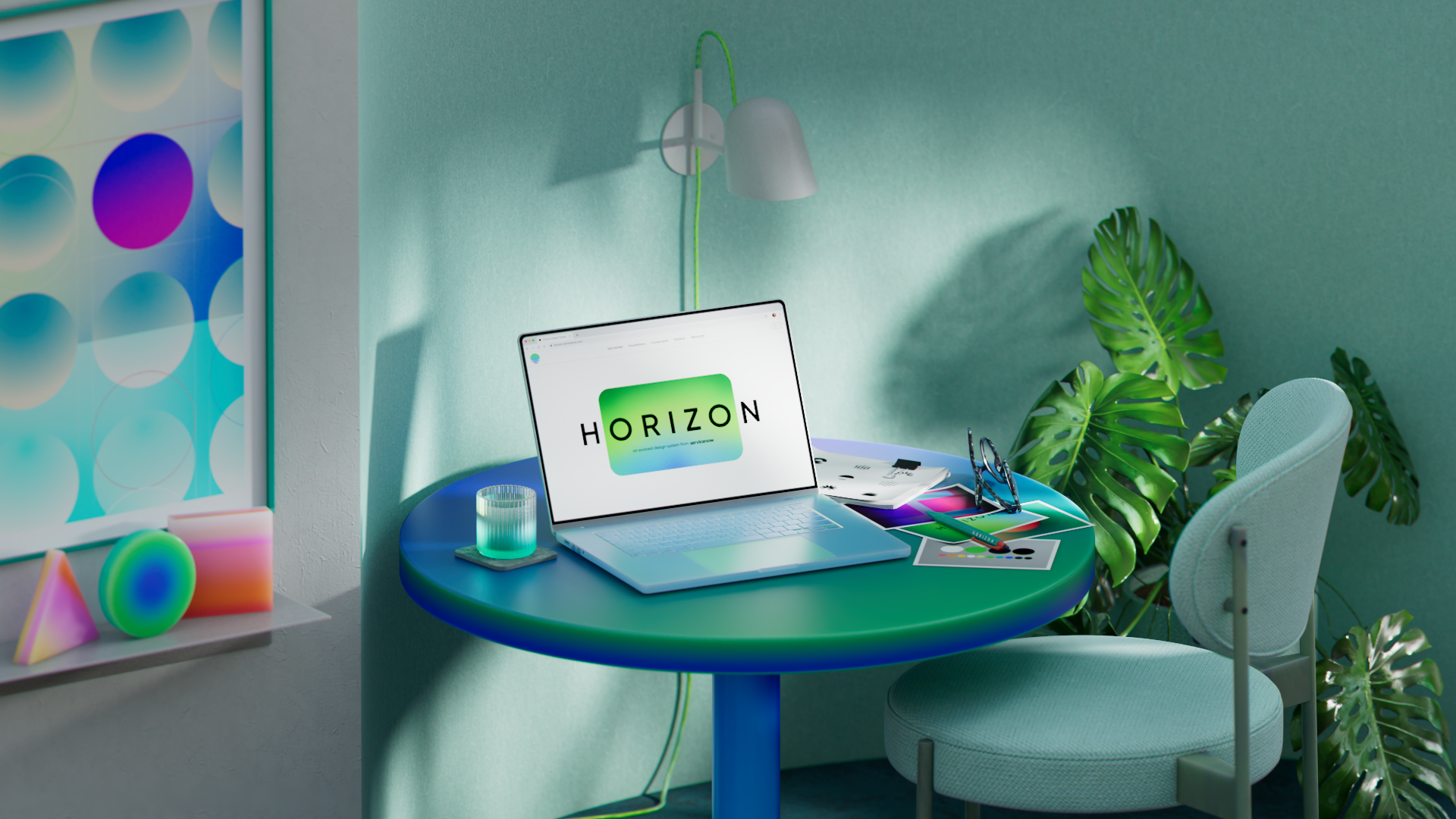
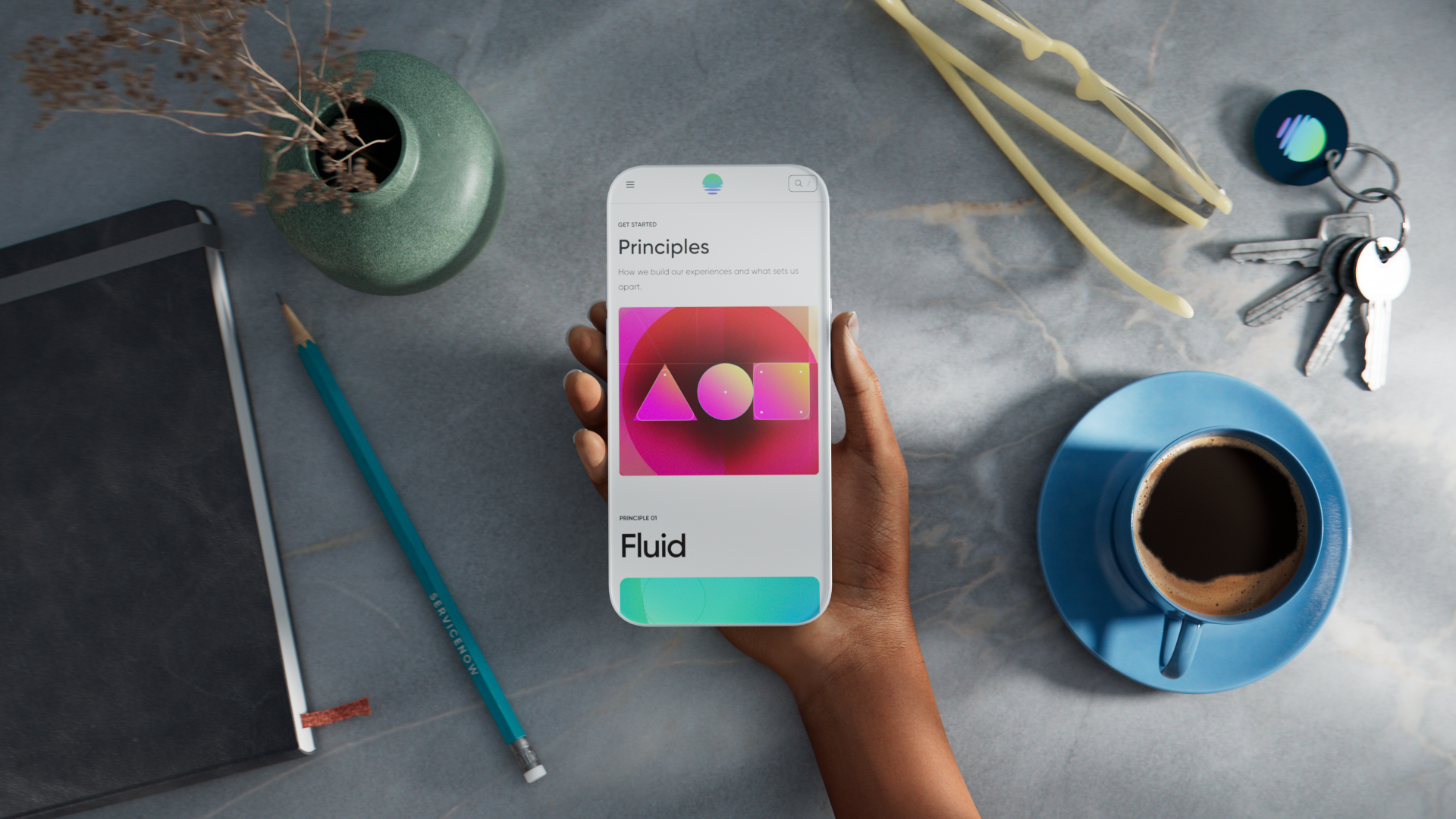
The launch represented more than a website release. It established a new operating model for how design guidance would be delivered across ServiceNow — one destination, one structure, one source of truth. You can view it here.


Building beyond launch
After launch, I continued contributing to Horizon's expansion:
Design enablement programs and UX certifications — including the UX Micro-Certification, now live on ServiceNow University
Figma education and library improvements
Horizon 2.0 initiatives
AI-native prototyping workflows and AI design guidelines
Design governance efforts
Horizon has evolved from a design system website into a broader design platform supporting both traditional and AI-assisted workflows — still actively growing today.
What I learned